
UAC (AGAIN) 1985 - 1986
Unilever had for many years since its formation in 1929 pursued a policy of avoiding as far as possible payments to third party companies for services important to their core businesses which was the production of soap products and margarine. Their solution to reducing volatility in the raw materials market was to buy and then run the plantations where these products were grown. This policy was started by William Lever himself before the amalgamation with Margarine Unie. In addition to the plantations, his ownership of the Southern Whaling and Sealing Company was a means of getting sufficient whale oil, before whaling became tabu, as it was then one of the principal ingredients of soap. Two other services Unilever relied on were road transport and shipping. The wholly owned UAC (1929 – 1949), Palm Line (1949 - 1985) and Norfolk Line (1973 – 1985) fleets gave Unilever some control over sea freight costs, a notoriously fickle and volatile market. Another very high ‘service’ cost incurred by Unilever was advertising.
To some extent, Unilever tried to keep its conservative ‘management style’ uniform across the organisation. In many respects the style was ultra-conservative and dated and it failed to keep pace with the more modern ideas of less hierarchal companies. Unilever management was hidebound with ‘rules’. The author of this section remembers coming ashore in 1977 into the Palm Line Head Office and being somewhat bemused by the difference in the employees’ chairs. It was immediately clear to him that an employee’s position in the company was determined by their chair. The chairs allocated to the Directors, Senior Managers, Middle Managers, Assistant Managers and Clerks, all very specific grades in the organisation, were different. These ranged from fully upholstered, multi-movement with leather arms to basic with no arms and no movement. Other ‘ranks’ such as the tea ladies and postmen didn’t even get a chair. He recalls one junior employee jokingly asking him when she was assigned some extra responsibilities whether she could have one arm on her chair.
One of the major costs incurred by the Unilever family of companies was advertising. Successful advertising for both the soap products and margarine businesses was very important. Lever, in keeping with his policy of not paying third parties for services had formed his own advertising agency, Lintas (standing for Lever International Advertising Services) back in 1899.
Unilever’s business in the late 1970’s and early 1980’s was not as successful as previously and, in comparison with other comparable large multi-national companies, below par. Probably apocryphal, but it was suggested that this was due to a flawed advertising strategy. Advertising by that time had become a massive industry which was led by companies with a free-thinking and innovative approach. It was suggested that Lintas staff were held back by the conservative Unilever management style and their advertisements suffered accordingly.
Whether this was true or not, Unilever in the early 1980’s made the far-ranging decision to pull back into what it saw as its core business and divest itself of the ‘service’ companies it owned. Whilst this strategy was reported in their annual accounts at the time most of the employees in these companies appeared not to understand the probable consequences of this new policy. However, the writing really was on the wall for Palm Line. Whilst Unilever disposed of its share in Lintas in 1982, the first and most obvious clue was the sale of Norfolk Line to the giant Maersk Corporation in early 1985.
The Palm Line Fleet had been reducing in numbers for many years but this was partly compensated by the building of larger and faster ships. However, by 1981, the last two of the twelve 1956/1961 Swan Hunter built ships, the Lagos Palm and the Ikeja Palm, had been sold. The two 1950s German built ships had been sold by 1976. The second-hand bought Africa Palm was sold in 1984 and this was followed by the Apapa Palm in 1985. All that remained of the Palm Line fleet by the summer of 1985 was:
Bamenda Palm (Sailing as Lloyd Texas on charter to Lloyd Brasiliero)
Badagry Palm (on charter to Lloyd Brasiliero)
Lagos Palm (Sailing as Lloyd Rio on charter to Lloyd Brasiliero)
Lokoja Palm (Sailing as Lloyd Australia on charter to Lloyd Brasiliero)
Matadi Palm
The rates for the four ships on charter to Lloyd Brasiliero were not generous and the ships were operating at a loss. That notwithstanding, Lloyd Brasiliero was by then looking to charter in even bigger ships at reduced rates so the charters of the Palm Line ships were due to end. The bitter truth was that by this stage all Unilever cargoes could be carried by third parties far more cheaply than the Palm Line fleet could manage.
UAC was instructed by their parent company Unilever to dispose of Palm Line in a manner that caused least loss as well as minimising any bad publicity. To this end negotiations were opened with their West Coast competitors Ocean Fleets, the owners of the West Coast operators Elder Demster Lines. A deal was struck whereby the company name was sold for a peppercorn fee without any ships being transferred. As part of the sale, Ocean Fleets acquired Palm Line’s share of the two conference lines to West Africa, UKWAL and COWAC, which were a genuine asset. To balance this, they also acquired Palm Line’s share of the loss-making Tilbury and Liverpool stevedoring companies, Metropolitan Terminals and Liverpool Maritime Terminals respectively. The deal struck, the transfer completed on 22 October 1985. Palm Line as we knew it was, sadly, no more.
The four remaining Palm Line ships were now UAC owned. The famous green palm trees were removed from the funnels and the ‘Palm’ suffix was removed from the ships’ names with the ships being renamed simply:
Badagry
Lagos
Lokoja
Matadi
A month after the sale of the company the Bamenda Palm became the first to be sold, in November 1985. She went to Diarko Maritime Company and was renamed Arko Glory. Under a later name of MC Ruby, the ship became infamous when six stowaways were found on board and murdered. (See also the Losses and Accidents section for more details). As the Renata, the ship was broken up in 2009.
Business carried on, however, the intention wasn’t to stay in the shipping world. The remaining four ships were now up for sale and, one by one, buyers were found.
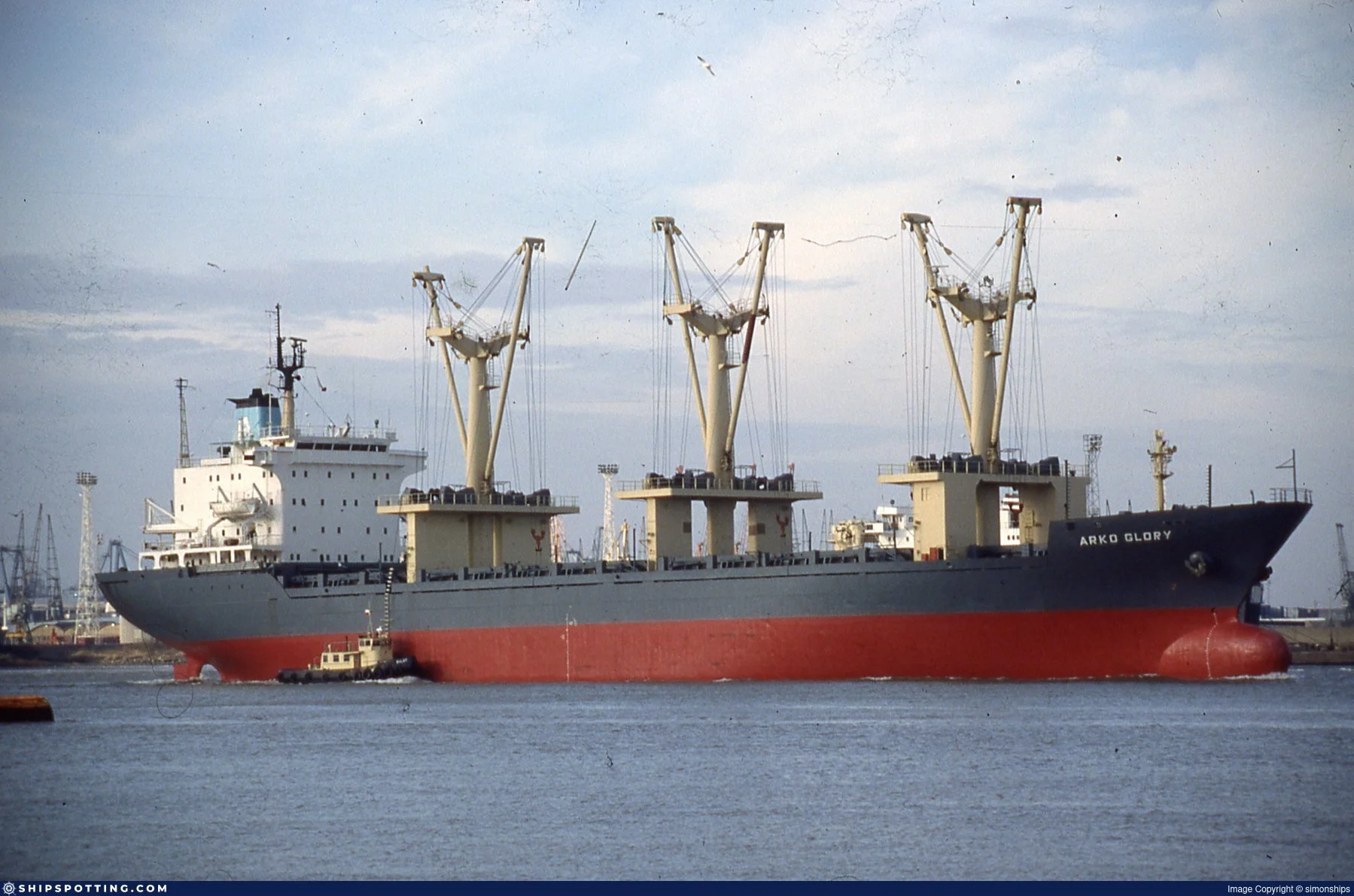
Approaching Tilbury as the Arko Glory. © Simonships
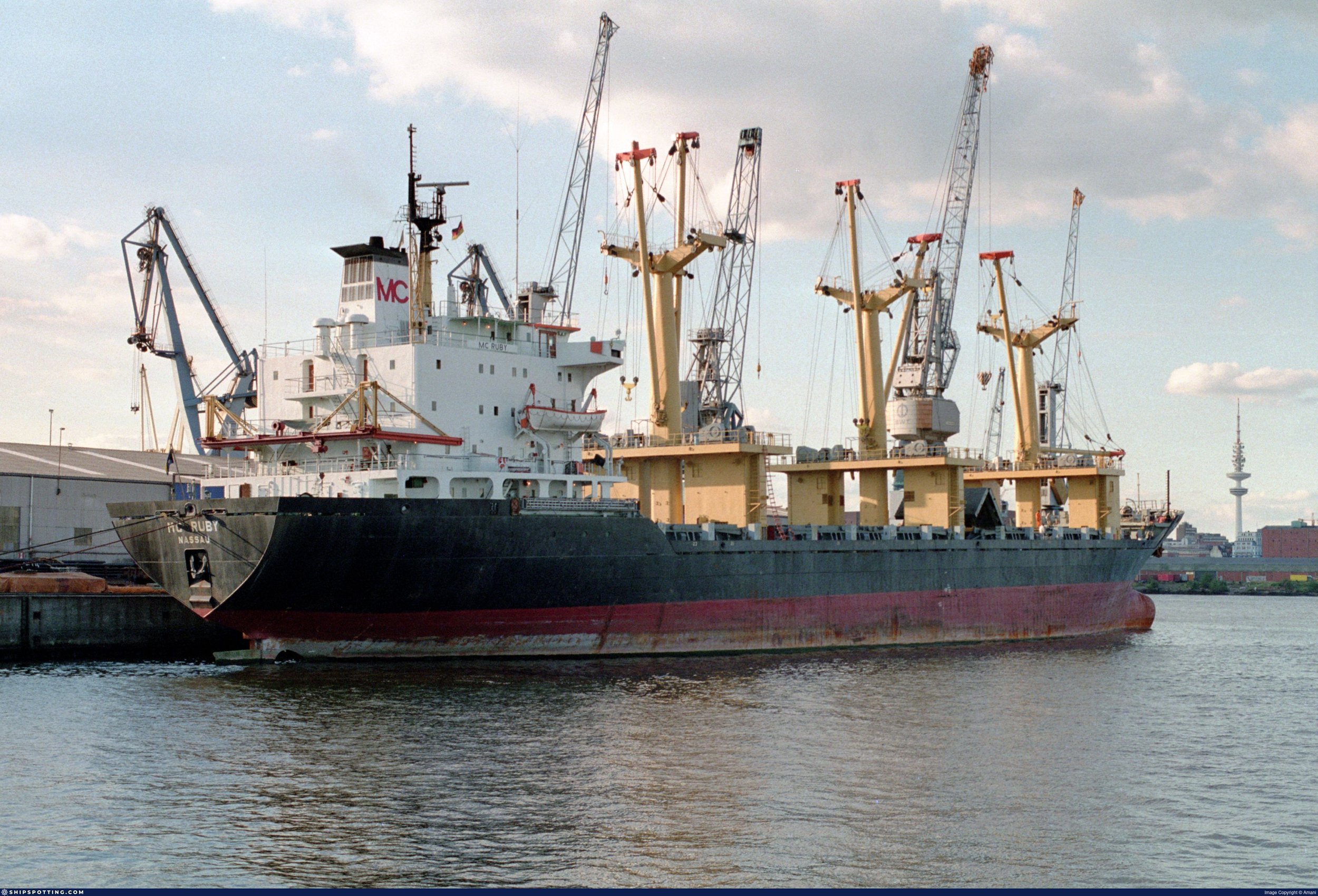
In Hamburg as the notorious MC Ruby. © Amani
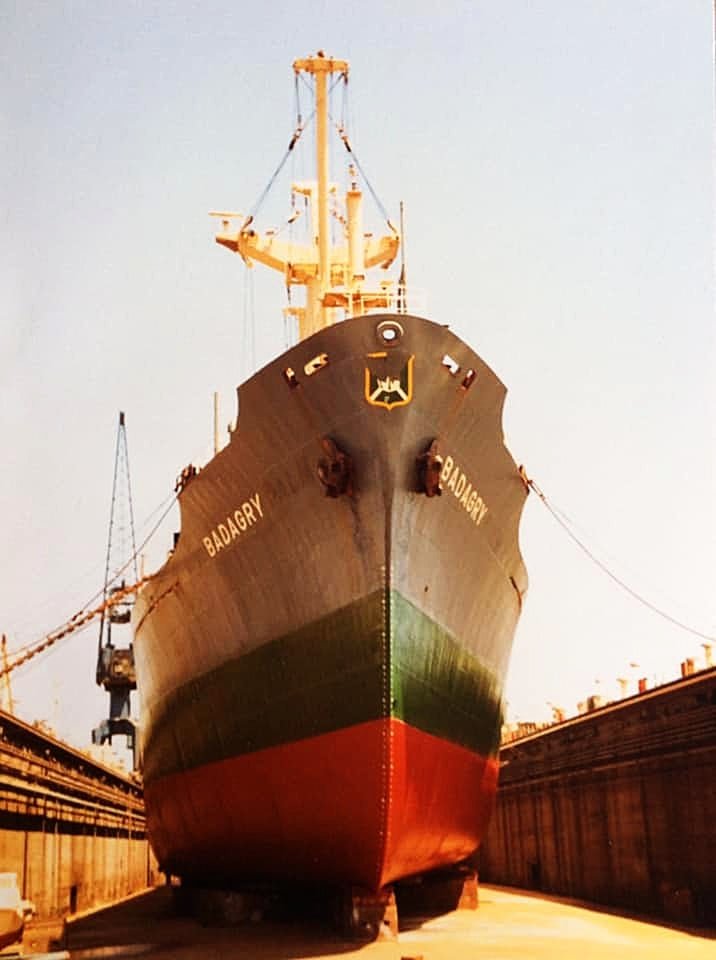
Becoming the Badagry in Rio 1985 courtesy of Gary Proctor
The Badagry was the second to be sold to Navitrade Holding Corporation, part of the V Ships group of companies. She also had a tragic end when under the name Cordigliera and then owned by Sinha Shipping Pte., she sank off the South African Coast in 1996 with the loss of all on board.
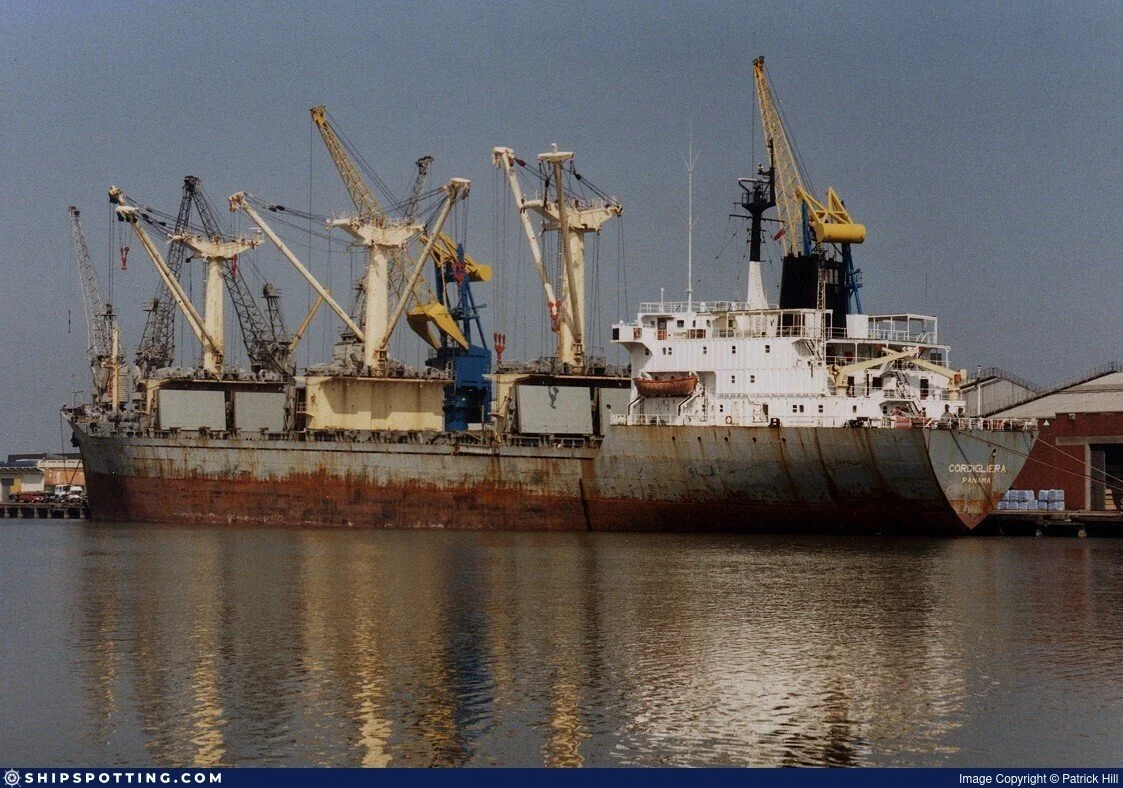
As the Cordigliera in Hull KGV dock. 06/05/95, looking worse for wear. © Patrick Hill
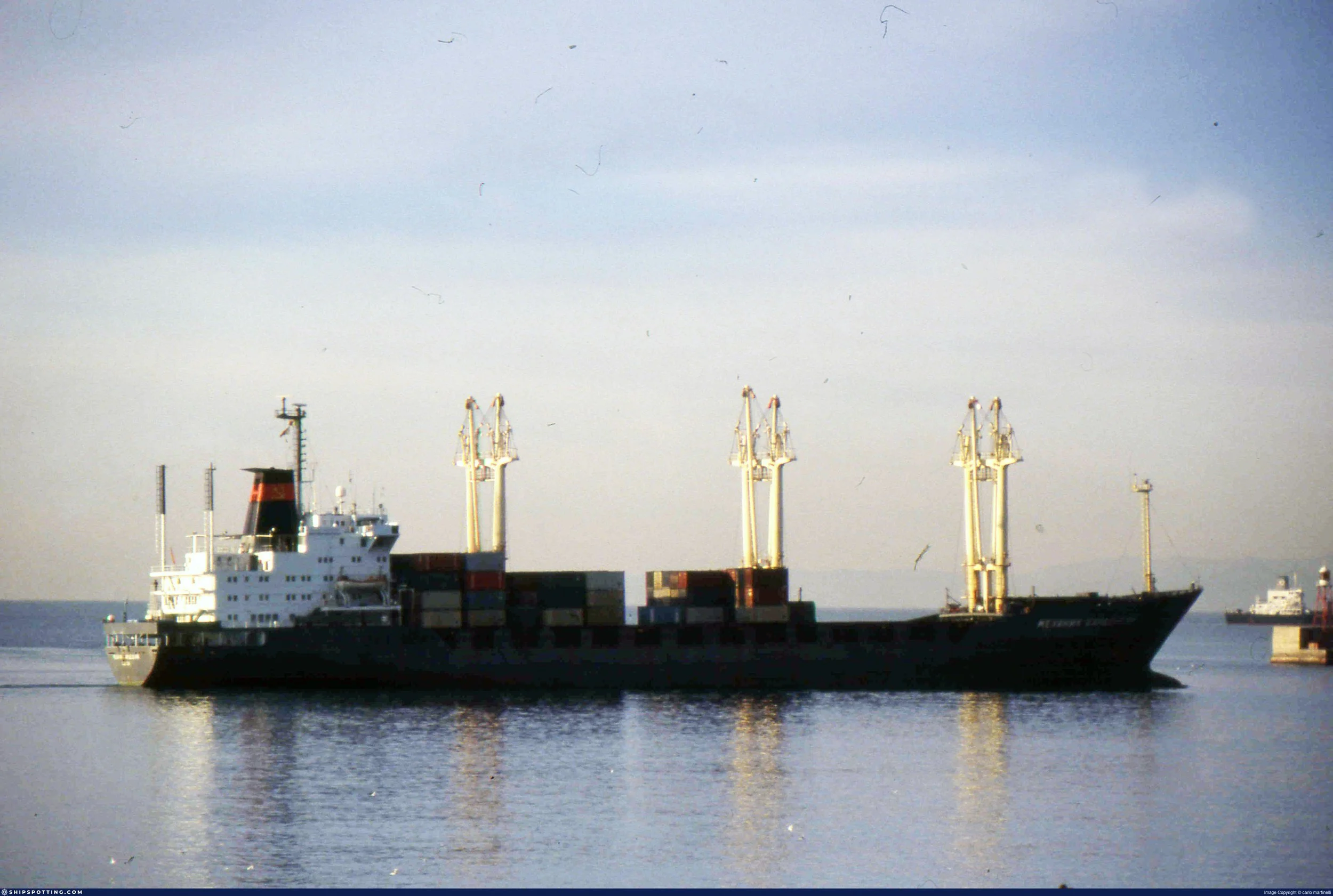
Mekhanik Bardetskiy arriving at Genoa 12/12/88. © Carlo Martinelli
The Lagos and Lokoja went soon after, both bought by the USSR Black Sea Shipping Company and renamed Boris Andreyev and Mekhanik Bardetskiy respectively. The Boris Andreyev was renamed Pearce and then Nieves B before being broken up in 2009. As Nieves B, she had her cargo gear removed and became a small container ship

Boris Andreyev seen in Singapore 17/10/94, cargo gear removed. © Martin Klingsick
And then there was one. The final UAC ship, the Matadi was handed over to her new owners, the Troodos Shipping & Trading Company Ltd., later in the same year, 1986, and renamed Modesty. The last UAC Master was Captain Adrian Hobbins. The vessel, which over the years had generated the largest profits for Palm Line, was broken up in 1995.
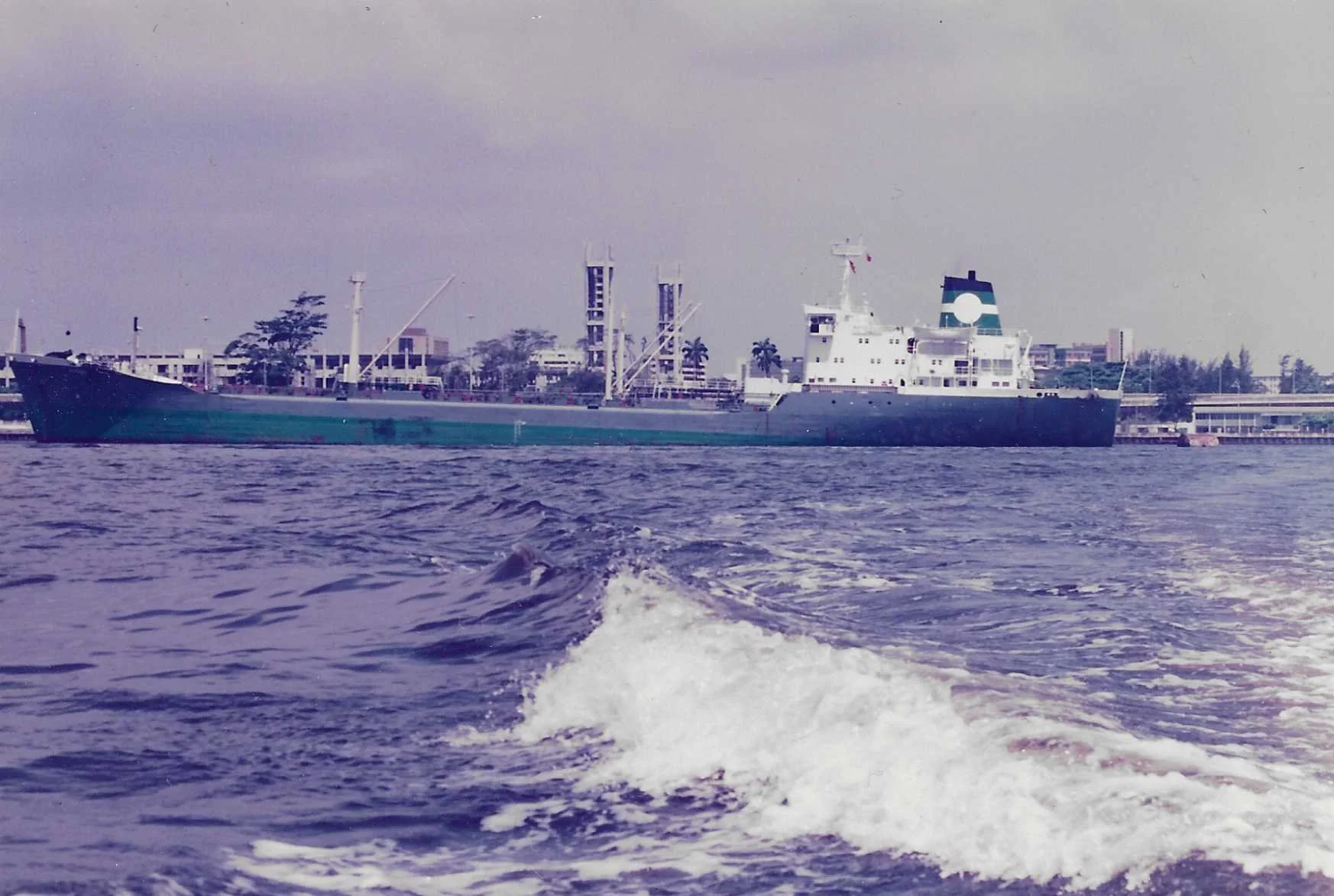
Matadi at Apapa. Without the Palm tree, just wasn’t the same. Image taken by the late Al Coppin and courtesy of Yvonne, his widow.
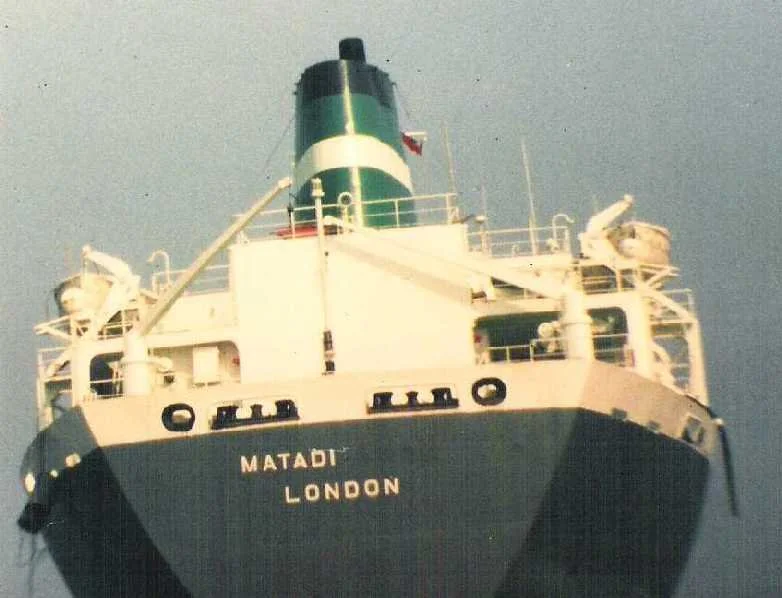
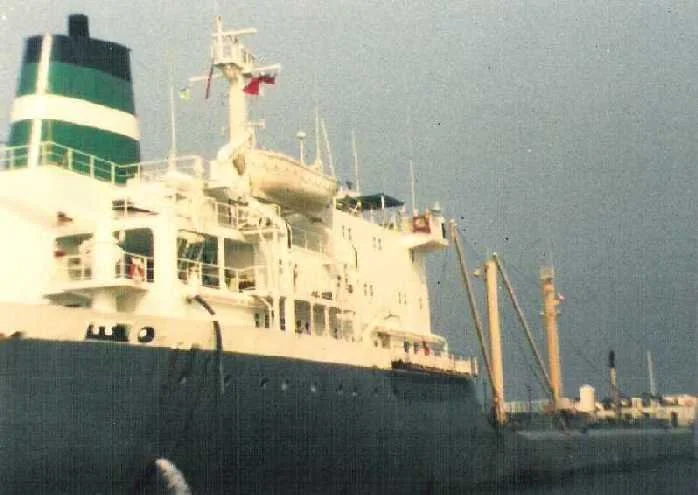
Two more photos taken by Al Coppin of the Matadi at Apapa in December 1985.
Palm Line and now the shipping arm of UAC had quietly disappeared.